A short history of music
From bone flutes to algorithm playlists: the key moments that shaped the music you hear today.
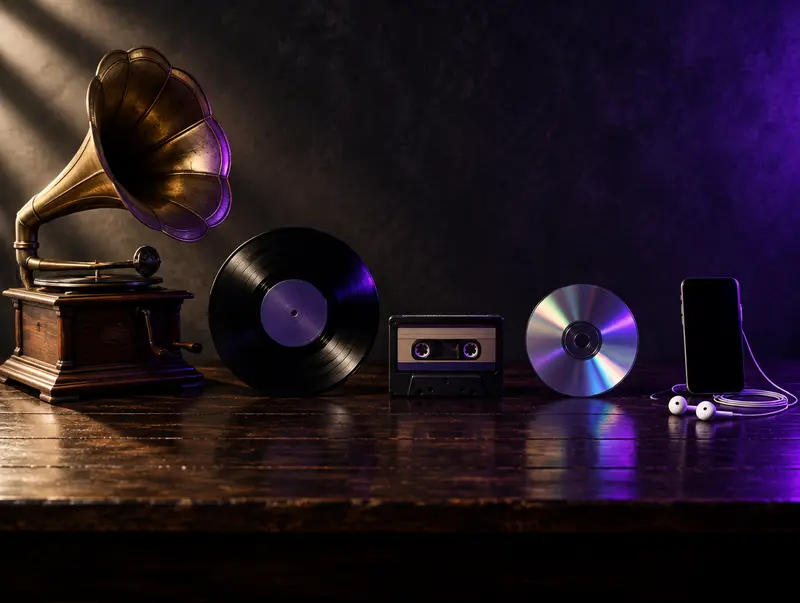
- 40,000 years ago
The first instruments
The oldest known instruments are flutes made from bird bones and mammoth ivory, found in caves in Germany. People probably sang and drummed long before that.
- Antiquity
Music of ancient civilisations
Ancient Egypt, Mesopotamia, China, India and Greece had harps, lyres, drums and bells. Greek thinkers like Pythagoras discovered that musical intervals follow mathematical ratios.
- 500–1400
Middle Ages
In Europe, monks developed Gregorian chant and the first system of written notes. In the Islamic world, scholars wrote treatises on music, and the oud spread widely.
- 1600–1750
Baroque
The era of Bach, Vivaldi and Handel. Opera was born, and instruments like the violin reached their classic form.
- 1750–1900
Classical and Romantic eras
Mozart and Haydn perfected the symphony; Beethoven, Chopin and Tchaikovsky filled music with strong emotions. Public concerts made music available to the middle class.
- 1877
Recorded sound
Thomas Edison invented the phonograph. For the first time in history, music could be stored and played back, and the record industry was born.
- 1900–1940
Blues, jazz and radio
African American musicians created the blues and jazz. Radio and records carried them around the world, and Louis Armstrong became one of the first global stars.
- 1950s
Rock’n’roll
Chuck Berry, Little Richard and Elvis Presley electrified rhythm and blues. Teenagers got their own music, and the electric guitar became its symbol.
- 1960s–70s
The age of albums
The Beatles, Bob Dylan and Motown changed pop forever. Reggae, funk, metal and punk appeared; artists started to think in albums, not only singles.
- 1970s–80s
Hip-hop, synthesizers and MTV
Hip-hop was born in the Bronx, synthesizers and drum machines created new sounds, and music videos on MTV made artists like Michael Jackson and Madonna icons.
- 1990s
CDs, grunge and rave
The CD became the main format. Grunge, Britpop, gangsta rap and rave culture shaped the decade, and electronic music moved from clubs to festivals.
- 2000s
The digital revolution
MP3 files, file sharing and the iPod changed how people collected music. YouTube, launched in 2005, allowed anyone to publish songs for the whole world.
- 2010s–today
Streaming, TikTok and a global stage
Streaming services gave access to tens of millions of songs. K-pop, reggaeton and afrobeats became global hits, short videos make songs viral, and AI tools raise new questions about creativity.
Why history helps you listen
Knowing where a style comes from makes it more interesting. When you hear a hip-hop beat, you may recognise a funk drum break from the 1970s; in a pop ballad, you may hear chord progressions that Baroque composers used 300 years ago. Continue with our genre guide to hear these connections for yourself.